
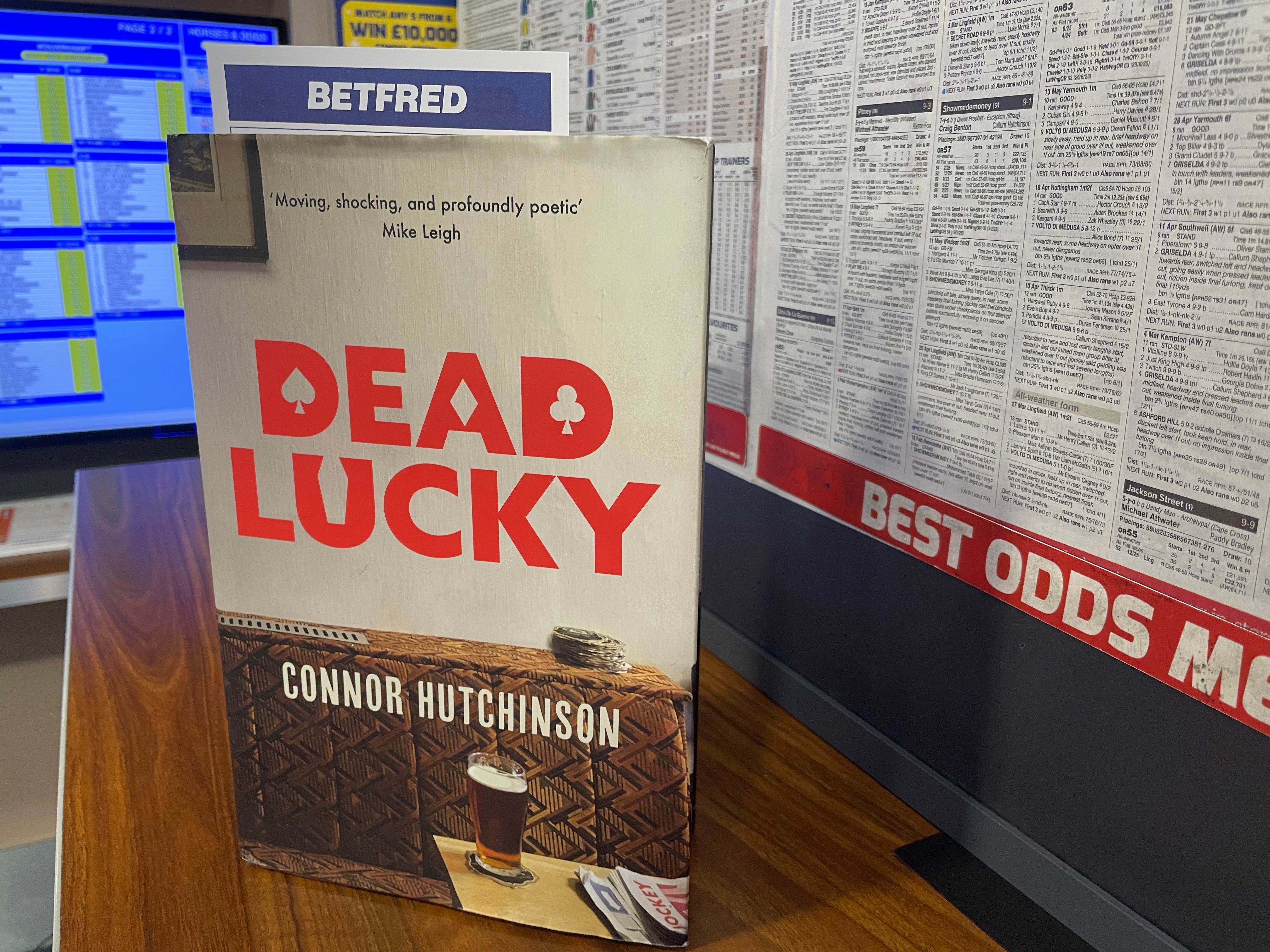
On… Dead Lucky
Time to hedge my bets?

“Momento mori.”
Remember you must die – Latin philosophy
Finally — some hope.
As I’ve written about before, here, here and here, and as you’re all no doubt sick of hearing, I’ve been facing an existential crisis; change my book in the many ways I’m advised to, and land a chance of getting published. Or stick to my guns, say what I want to say, in the way I want to say it, and stay out here, on the periphery, shouting into the void.
The advice is always the same. ‘You’re a great writer,’ they tell me. But I’ve got no chance unless I ‘land the book more with female readers’, ‘tell it more from his girlfriend’s side’, ‘focus more on their relationship’, ‘make him more vulnerable in the first few lines’, and ‘don’t make him so angry’. It doesn’t matter that Britain is full of angry men just like my protagonist, men who’ve seen their neighbourhoods and livelihoods ruined, men who are milked and monetised and then lectured by their ‘betters’, men who work hard but because of where they started in life, can never quite get ahead.
Because those men don’t get to be represented in books. They don’t count.
… or do they?
Dead Lucky is an anomaly. It shares so many similarities with the book I cannot get arrested with, and yet somehow it has been published. Yes, it doesn’t have the same anger my book does, but it does feature a straight, white, working-class Englishman who favours a few jars with the lads to a night in with the Mrs. It’s a dodo that is somehow still flapping its wings. The exception that proves the rule. It fixates on a sport – racing – just like mine does with football. The girlfriend wants to settle down, but she’s hardly in it. We do get some vulnerability, but not until much later on.
It’s masculine. It’s full of near the knuckle jokes. Like mine, the main character is a flawed man who tries his best, but falls short, heavy-drinking leading to bad habits, vices, nights that end in fights, and moral failures that end in self-inflicted wounds. Realistic men whose only real – but temporary – escape is the hope of victory in a long-odds bet, or in a Play-Off Final featuring route one hoofball.
Dead Lucky’s main character even drives a Transit van, just like my one does.
And Dead Lucky is in many ways, more problematic than mine, because it makes its hero an undertaker’s embalmer with a gambling addiction, and the scenes of body preparation are genuinely upsetting. It’s a great book, a real book, but one that I’m not sure I can recommend, because I don’t think anyone really wants to know what happens on a mortuary slab (but fair play to Connor Hutchinson for his research).
It’s a very clever book. It’s a book about death, which of course makes it about life, but it’s also a novel about appearances; preparing a broken body for an open casket before you go home and put on a show to your girlfriend when you’re dying inside because you’ve been lying to her about your gambling. It’s a book about friendship, and found family, and ‘weeks of hard graft and necessary lies’… and it all leads to a make-or-break trip to Cheltenham, the number one racing event in the calendar. It’s unashamedly laddish. And that makes it exciting. To the likes of us, anyway.
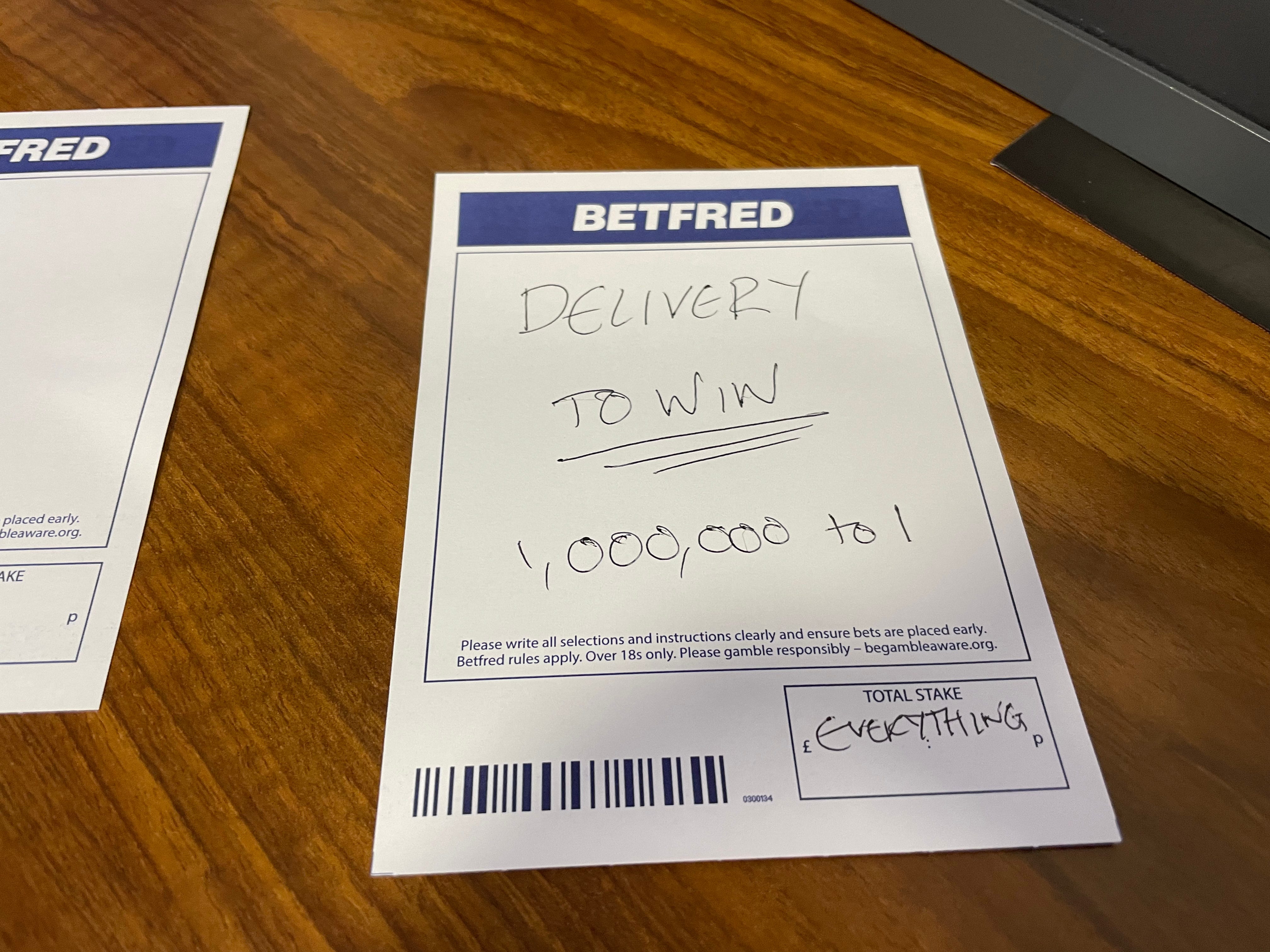
The observations are spot on. Ordering the second cheapest wine, not because you’re tight, but because that’s what you can afford. The row with your Mrs while you pretend everything is OK to the waiter, the release – the sheer fucking release – of a night out with the lads when you’ve been doing a (literal) dead-end job all week. The banter and the nicknames are laugh-out-loud funny, harsh enough to sting, clever enough to show they care. The Openshaw language is banging; ‘summot’, ‘jibbed on’, ‘tan it’, as are the settings, the club, the bookies, the chicken shop, the Premier Inn, B&M and Wilko, and the ‘real man’s’ suspicion of that first IKEA visit, and what it means for your life from then on. It captures the excitement of the chase and the night out with the boys; a book about boozing and gambling and how bad they are for you, but one that makes you desperate to nail a few pints then stick a bet on, no matter how low the chances…
Worth a punt?
There’s depth, too. In chapter 17, there’s a line: ‘I can’t help but cry though’, which echoes, perfectly, the tone of those angry young men novels of the 1950s.* Hutchinson does a great job making his hero, Jamie, vulnerable (but crucially, unlike I’m told to do, does not do so immediately), and provides reasons for his addiction, including his childhood and societal prompts like the betting ads we’re bombarded with. Maybe that’s why he’s got the nod to get the agent and be published, while I linger here, howling with madness. But Jamie is not ‘likeable’. He’s nuanced, and damaged, and he does a load of bad shit, even if he does pay along the way. This is a book for men, despite publishing’s consensus that ‘men don’t read’. And some of the descriptions of women’s appearances… how Hutchinson’s got away with them I do not know.
“What is it about having a cock and balls where you feel like you can’t talk about your feelings or explain to each other what is obviously, slowly ruining your life?”
Dead Lucky
It’s a book about hope that offers me hope. If Dead Lucky got published, maybe, just maybe, there is space for commercial fiction about men like ours, and you can get it done without compromising completely. Maybe you can slip beneath the radar and sneak in. Maybe there are one or two people in publishing, hiding in the shadows, a secret resistance, that understand that straight, working-class male lives should be represented too, and that books about them might just resonate. Or maybe, and this really fucking pains me to say it, it’s just been published because Dead Lucky could, under certain circumstances, be considered better than my book.
It is really, really good.
Dead Lucky ends in a coffin. It’s a literal and literary reminder that we’re only here for a short while. So what do we do, knowing the end is always coming? Do we stick to our guns? Or do we bend to get ahead and to get that book on the shelf before we cark it?
Because publishing is just like death. They both want to put you in a box.
The question is, how long do you stay out of it?
++ Should I start listening and stop being such an egocentric bastard? Am I kidding myself with my novel? And what are you backing at Newton Abbot on Wednesday?
* Couldn’t we do with a few more modern versions of those? And, by the way, if you want an angry young man-style book about gambling, The Lowlife is ace.
- - -
Help me
“Everyone will congratulate you. But very few people will actually help.”
Look — I need your help. I can’t afford the expensive courses that get you in front of agents and well-connected writing tutors. I don’t know someone who knows someone who can get my manuscript placed on the desk of someone who matters. And slush piles are normally skim-read by first-jobbers who have little experience or understanding of the kind of man I’m selling.
So I’ve got one shot. Build an audience to get as many influential eyes on my writing as possible, here, and hope that one of them, just one of them, will see the quality is there and begin to champion it.
If you want to help, subscribe (it’s free), share my posts and extract, leave comments, restacks and likes, and talk about what I’m doing and how I write. Tell your friends, online and off. Bring it up with people you meet. Stop men and women in the street that are holding books and convert them to the cause. Make the case. Right the wrong. Spread the word.
- - -