
On... 29 Locks
On the straight and narrow(boat)

“I live by the riverrrrrrr…”
The Clash – London Calling.
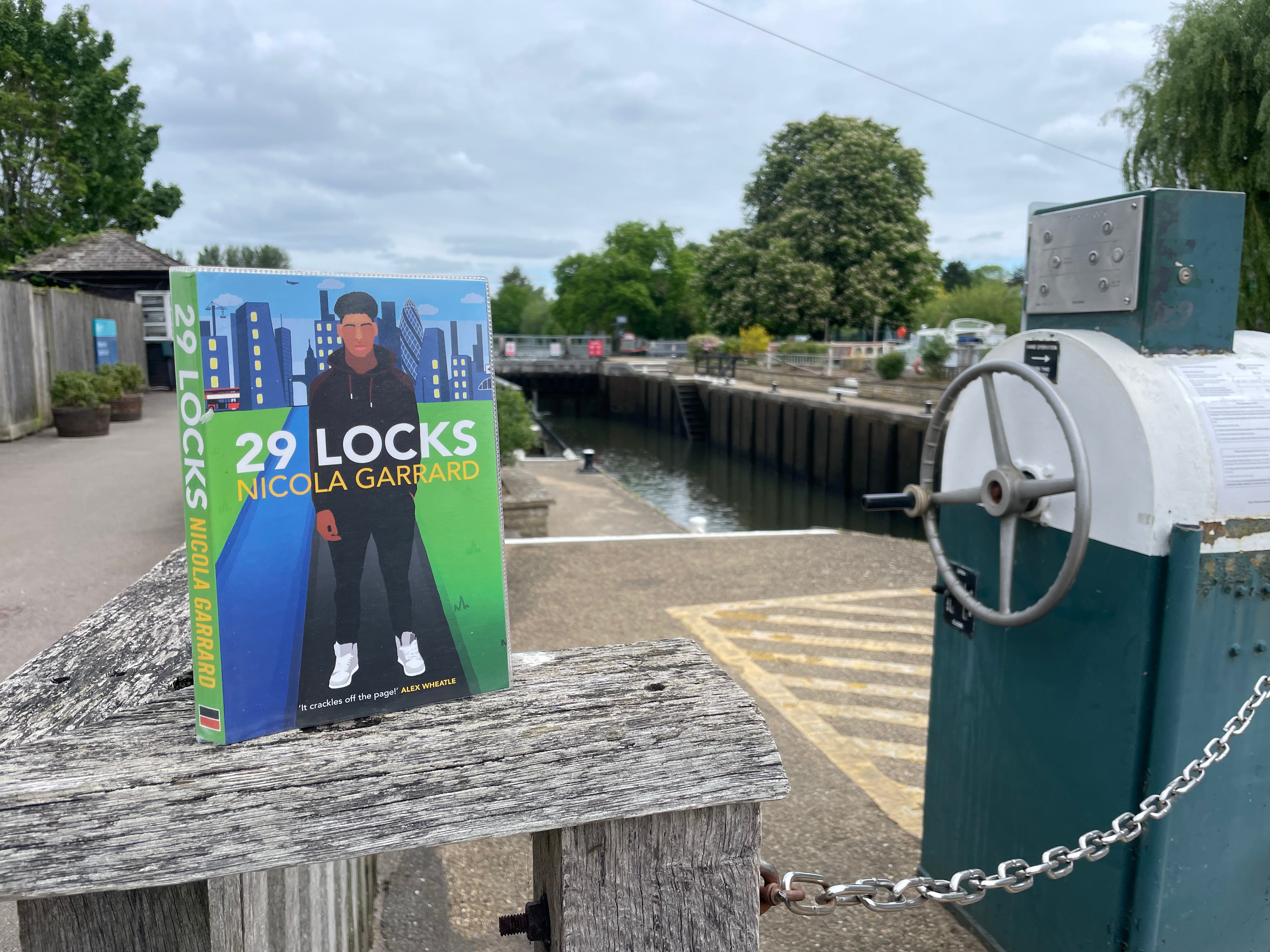
As a writer writing about the working-class experience, you’re always seeking out other authors that can do nuance, do complex character, do lack of choices and do justice to the lower order lives that are just as rich, and arguably more fulfilling, than the more privileged lives we’re used to seeing on the page.
… and, whisper it… some of these authors even get agents and publishing deals.
Recently, I volunteered at the Oxford Literary Festival, and attended a double bill talk with Seascraper’s Benjamin Wood, who I’d read, and On the Edge’s Nicola Garrard, who I hadn’t. I wanted to talk to Wood about his fantastic, timeless novel, and seek any tips about how a straight, white, working-class man writing about a straight, white, working-class man can crack an industry where almost everyone went to private-school and Oxbridge, and where when they hear your accent, they’re more likely to assume you’re there to clean the windows, than to pitch a hugely-uplifting novel that will resonate.
But while I was there Garrard spoke so eloquently and passionately about her novel and young lives, and read a dynamite section from On the Edge, that I was hooked, and picked up her earlier effort, 29 Locks.
29 Locks follows Donny, an intelligent, high-potential, mixed-race, poverty-stricken Hackney lad who’s passed from pillar to post while his drug addict mum serves sentences and tries – and often fails - to get herself straight.
Told in authentic first-person MLE (Multicultural London English), we see Donny in school, in custody, in a foster family, in temporary accommodation, in tears, in rage, in grief, and in danger… and even in South London*… before we see him in ‘county’, a countryside area where he begins to mix with the privileged types that will probably end up in the city or publishing. There he meets Andrew, a mentor of sorts, who teaches him about narrowboats during a work experience placement on the local canal. It’s here that Donny begins to ‘thrive’ at school… but the call of home is never far away, and soon Donny must make a stick or twist choice between the city and family, or the open-air, stability, and an easier way ahead.
Garrard, who works with young people like her main character, throws herself into the voice of Donny, all ‘allow it!’, either on his ‘ones’ or off on his ‘creps’ with his ‘mandem’. She creates a vivid young boy in danger of becoming a younger, the adolescent fighting to find himself as he finds himself hungry, in strange surroundings, with divergent role models and an easy path to the roadman life of minor drug deals and major violence. We see Donny grow and fluctuate, often within one paragraph, between vulnerable, chicken-box obsessed infant, and big-man adult looking out for his ‘fam’, ready to attack, and seeking to become protector / provider for his vulnerable mother. And Garrard is sharp enough to leave Donny on the periphery of the ‘roadman’ lifestyle, never fully in but never fully out, and who, despite his peripatetic life, is always drawn back to home; home being his mother, not a physical abode.
Eventually it’s that pull of home that leads Donny to ‘borrow’ a narrowboat, and navigate the 29 canal locks back to Hackney to meet his mum as she’s released from prison, a water-bound odyssey of obstacles and quite literal up and downs, that culminates in London and an outburst of rage against the amoral moneyed class who take and take and take.
The worry of novels like these, especially when they are deemed ‘young adult’, and written by an author with a social conscience, is that they’ll hit you over the head with a hammer about how you should think. Some of the social commentary teeters towards ‘on the nose’ — and not even Garrard can change my view of David Lammy — but 29 Locks skillfully handles the grey areas of growing up a good person, but being surrounded by bad things, and where loyalty and the very real need for ready cash often outweigh the ‘right choices’.
One scene in particular, an altercation with a pregnant teacher, is handled with beautiful - and brave - ambiguity, and we see Donny say awful things, have him commit crimes, and aid and abet, which gives us the shade we need alongside his obvious goodness and desire to help others, to make him ‘real’ and believable. We sympathise with Donny, understand him, and root for him, but Garrard doesn’t give us a cop-out happy ever after ending, or provide us with easy answers. For example, she leaves Donny and us in the dark about the exact circumstances of two impactful deaths, which give these tragedies more power than if it was all laid out in front of us. Some of the family dynamics threaten to fall into cliché, (the rich cad cheating on his wife with a younger model, the God-fearing African woman known for her cooking) but we get an effective counter-balance in the authenticity of the language, the situations, and the probably very realistic well-meaning but limited safety nets for boys like Donny.
And 29 Locks works. It’s believable. It packs an emotional punch. It’s important in the way Shuggie Bain and Only Here, Only Now are important books. You could argue it’s got a touch of The Old Man and the Sea, or Huckleberry Finn, or Goodnight, Mr Tom. It’s a grown-up book for teenagers. And it deserves to be much more widely read.
At the end of 29 Locks is a brief glossary of MLE, and a brief biography of the author. Nicola Garrard is an English teacher who has devoted most of her working life to helping inner-city children to love the written word. No doubt there have been times where she’s had to worry about her sanity, her safety, and tread that very fine line between teacher / social worker / confidante / responsible citizen. I bet she’s been paid crap money, worked long hours, and sacrificed time with her family to help kids that have all the potential in the world, but started out on the lower rung. I imagine a lot of the time it would have been easier to quit and do something else, and to put herself first. But Nicola Garrard has worked with young people for almost 30 years, helping them understand how Shakespeare relates to them, and opening doors and young eyes to lives beyond lower-level criminality.
And with 29 Locks she has written an insightful, hopeful, thought-provoking novel that honours her pupils – living and dead – and truly reflects their lives. A novel that might just teach us something, as well as entertain us.
The kind of book we need a lot more of.
So, as I say, I went to that talk looking for an author. And I went looking for a way-in.
But I think I found a new heroine instead.
++ What are your favourite books about young people? Do you read ‘young adult’ books? What types of young lives should we be seeing on the page?
*Publishing has discovered it at last! Check out Jamaica Road and No Small Thing.
- - -
Another thing…
I love football and fiction. Which other Substacks should I be following?
- - -
Added to the list.